
5 Questions Every Construction Project Manager Should Ask Before Starting a New Project
Because the biggest project risks aren’t on the site they’re in the assumptions you make before you start.

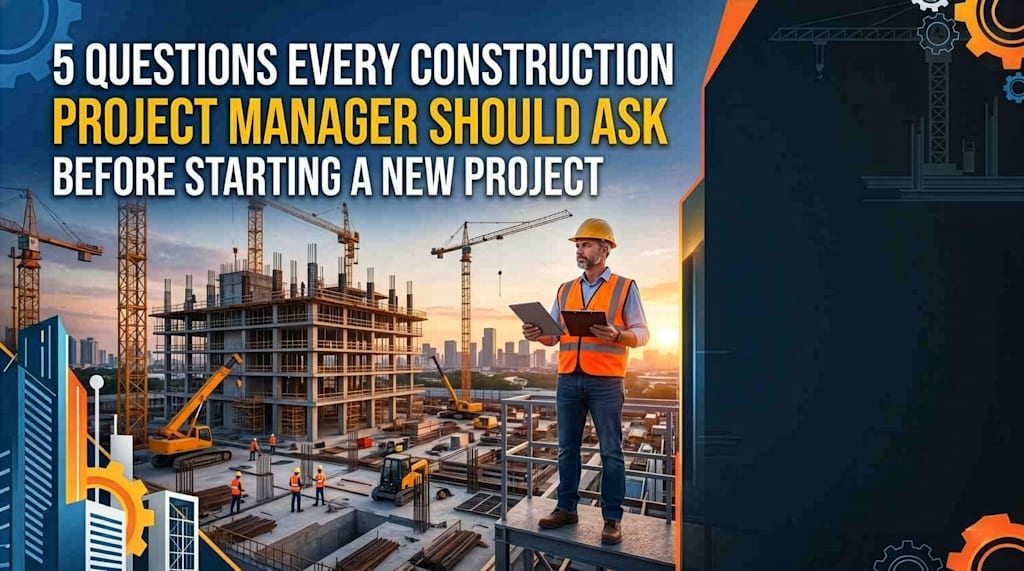
I’ve sat in enough project kickoff meetings to know the signs. Everyone’s energized, the Gantt chart looks clean, the client is happy with the budget, and the team is ready to mobilize. And then—about six weeks into construction—something surfaces that should have been caught two months ago.
A duct running straight through a structural beam. A permit that takes 10 weeks but was allocated two. A scope assumption that the GC read one way and the owner read another.
You’ve probably been there.
The honest truth is that most construction problems aren’t bad luck. They’re predictable. They show up when pre-construction gets treated as a formality rather than the most important phase of the project.
Before your next project kicks off, here are five questions worth asking properly—not just ticking off a checklist.
1. Does Everyone Actually Agree on What’s In Scope?
Not just “has it been documented.” Does everyone agree?
There’s a difference. A scope document can sit in a shared folder, signed and approved, while three different parties hold three different assumptions about what it means. I’ve watched a single sentence “contractor responsible for MEP rough-in coordination” generate a six-figure dispute because the GC and the MEP sub had different definitions of “coordination.”
Before a project starts, walk through the scope out loud with your client, your subs, and your design team. Not a formal presentation—an actual conversation. Ask people to explain back what they think is included. You’ll find the gaps faster than any document review will.
Also: write down what’s not in scope, just as clearly as what is. Assumptions that aren’t written down have a way of becoming commitments you never agreed to.
The numbers on this are sobering. PMI research found that scope changes contribute to cost overruns in 52% of construction projects. A separate analysis tracking 258 major international infrastructure projects found average cost overruns of 28%—and fewer than half of all construction projects globally finish within their original budget. A lot of that gap traces directly back to scope that was documented but not genuinely understood.
2. Has Anyone Actually Checked the Designs Against Each Other?
This is the one question I’d push hardest on—because it’s the one teams are most likely to wave past.
“Yes, the drawings have been reviewed.” Okay. But have the architectural, structural, and MEP models been checked against each other? Not just by humans flipping between sheets, but with a proper coordination process that catches the places where one discipline’s design physically conflicts with another’s?
Because here’s what happens when that step gets skipped: you find the conflicts on site. And on site, a conflict isn’t a digital note that gets resolved in a meeting. It’s a stopped crew, a heated call with the design team, a field change that may or may not get properly documented, and a change order that nobody budgeted for.
We had a project a few years back—a mid-size commercial fit-out—where the mechanical ductwork and the sprinkler layout had never been properly coordinated. By the time crews were ceiling-in, we had 40+ clashes to sort out. The rework alone took three weeks we didn’t have. Every single one of those conflicts could have been caught before mobilization.
That’s exactly what BIM-based clash detection does. It takes all the models—architecture, structure, MEP—combines them into one federated 3D environment, and flags every physical conflict before anyone touches a wall. The research behind it is credible: the Construction Industry Institute tracked direct rework costs across 359 actual construction projects and found they average 5% of total construction cost, climbing to 20% on complex jobs—roughly $15 billion lost annually in the US alone. A clash resolved at the design stage costs 10 to 100 times less than the same clash discovered and fixed on site. Peer-reviewed analysis of BIM-coordinated projects has found total construction cost reductions of around 8.6% and schedule reductions of 12.3% compared to traditionally managed projects. Those aren’t marketing numbers—they come from controlled academic studies.
One thing that often gets overlooked is the safety angle. When workers discover a conflict mid-installation, they improvise. They have to—there’s pressure to keep moving. And improvised decisions in tight mechanical spaces, near live services, with tools in hand, is exactly where incidents happen. Getting the design right before site work starts isn’t just about budget. It genuinely protects people.
I came across an article about a specific case where this played out in detail—if you want to see how coordination issues were caught early and what it meant for the project outcome, this piece walks through the real impact it had on safety and cost.
3. Is the Budget Honest, or Was It Built to Win?
Every PM knows what a bid budget looks like versus a build budget. Sometimes they’re the same thing. Often they’re not.
A budget built to win comes in tight on contingency, uses optimistic labor rates, assumes last year’s material pricing, and quietly underfunds anything that’s hard to justify on paper—like coordination, QA processes, or pre-construction services. It gets the contract signed. And then it creates problems every month until practical completion.
A budget built to build accounts for what things actually cost today. Not what they cost 18 months ago when your estimating database was last updated. Material pricing has been volatile enough over the past few years that assumptions get stale fast.
A few things worth checking specifically:
Real contingency. Not 2%. For a complex project with MEP scope, design coordination, or a compressed schedule, 5–10% is a minimum. If the number makes the bid harder to win, that’s information the client should have—not something to hide in the base cost.
Coordination costs. If BIM coordination or clash detection services aren’t in the budget, you’re not saving money. You’re just moving the cost from the pre-construction phase—where it’s manageable—to the construction phase, where it’s expensive.
Current subcontractor pricing. Not last quarter’s. Get fresh numbers, especially on mechanical and electrical scopes where material volatility has been highest.
The clients who end up frustrated at the end of a project usually aren’t surprised by the technical problems. They’re surprised that no one told them the budget was tight from day one.
4. Are Long Leads and Approvals Actually in the Schedule?
This one catches teams off guard more than almost anything else, and it’s entirely preventable.
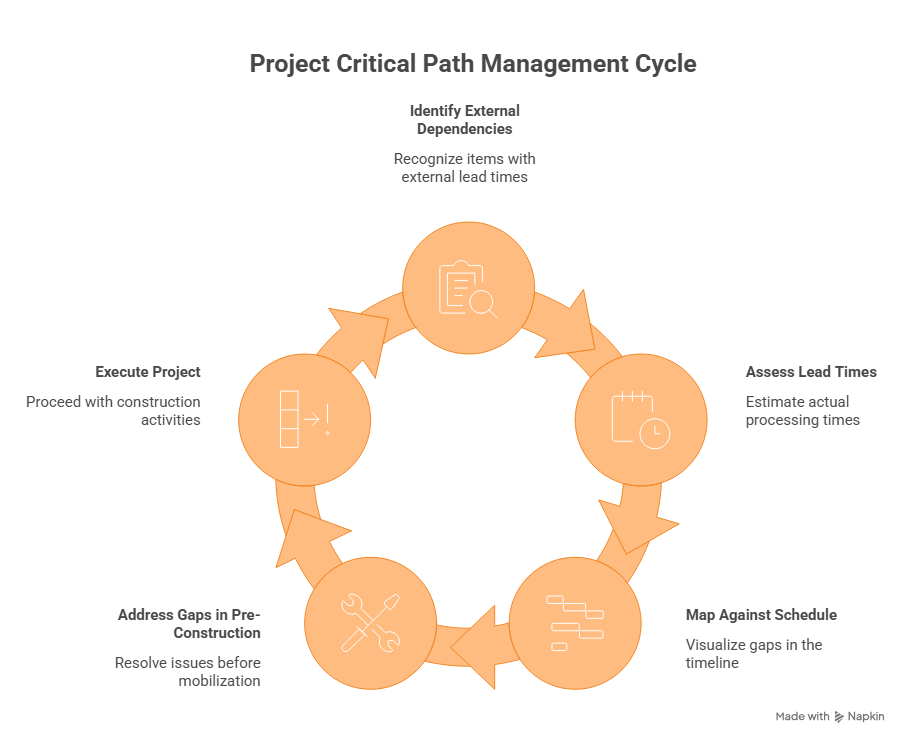
At the start of a project, everyone’s attention is on the construction activities—the structure, the envelope, the fit-out. But the items that end up on the critical path are usually not the construction activities. They’re the switchgear delivery that takes 28 weeks. The building permit that the local authority is sitting on. The utility connection approval that requires three rounds of submission.
If those lead times aren’t identified before the schedule is baselined, someone is going to make a phone call six months in, find out the equipment they need is 14 weeks out, and have to explain to the client why the handover date is moving.
Before kickoff, go through the full project scope and pull out everything with an external dependency or a lead time longer than four weeks. That includes:
- Permits and authority approvals (build in actual processing times, not hoped-for ones)
- Specialist or long-lead equipment—elevators, HV switchgear, custom facades, generator sets
- Utility service connections, especially new power infrastructure
- Anything imported or with supply chain risk
Map those against your baseline schedule and see where the gaps are. If the gaps are significant, deal with them in pre-construction, not after mobilization.
5. Does Every Party Know Who Decides What?
By the time a project is running, everyone has an opinion. The question is who has the authority to act on it.
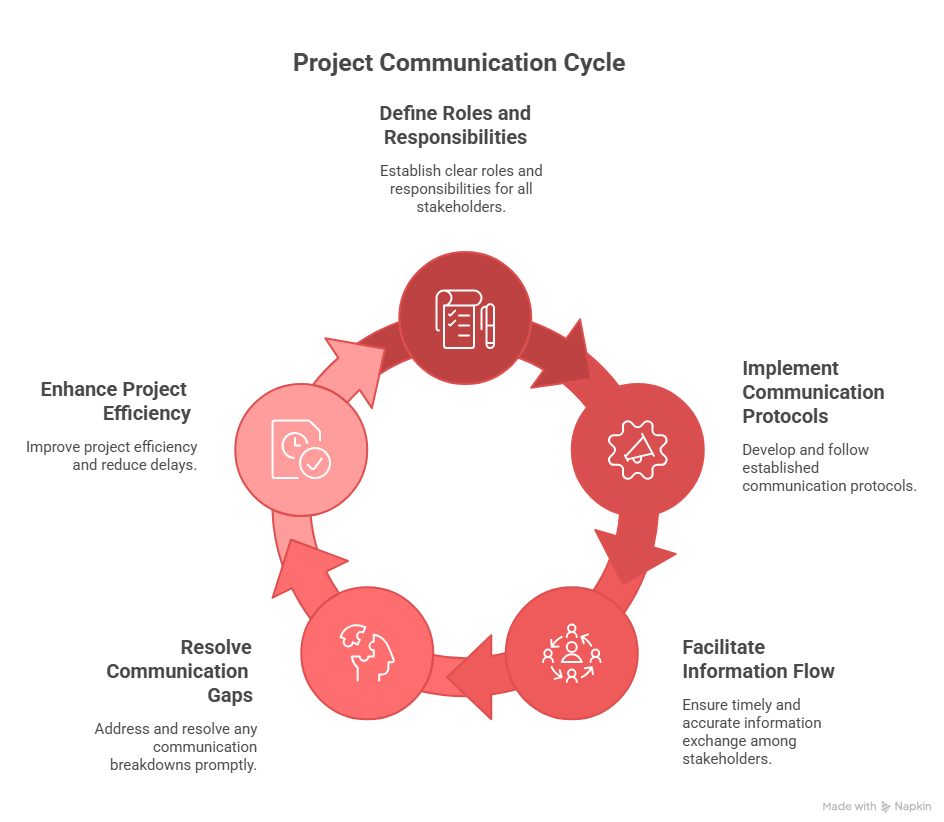
Communication breakdowns on construction projects rarely happen because people stop talking. They happen because multiple people are talking, giving different answers, and no one has established who the decision actually belongs to.
On a complex project—owner, design team, GC, specialty subs, and a BIM coordination team—the number of potential communication gaps is significant. RFIs that sit unanswered because nobody’s sure who the right reviewer is. Design changes approved by someone who didn’t have authority. Coordination model updates that don’t get communicated to the sub who needed them.
Before you start, define it:
- Who can approve design changes, and at what value does it escalate?
- What’s the RFI process—who initiates, who responds, what’s the turnaround expectation?
- Who holds the master BIM model, and what’s the update protocol?
- How does the owner want to receive project updates, and how often?
It doesn’t have to be a 20-page governance document. Even a one-page RACI—who’s responsible, who’s accountable, who needs to be consulted, who just needs to be informed—resolves about 80% of the “wait, whose call is this?” conversations that slow projects down.
The Real Cost of Skipping Pre-Construction
These five questions don’t take long to work through properly. A few focused meetings in the weeks before kickoff, maybe a coordination workshop with the design team, a schedule review with subs—you’re talking days of effort, not months.
What they prevent is substantially more expensive. A design conflict that takes an hour to resolve in a BIM model can consume days of site labor, materials, and management time when it surfaces during construction—the CII puts the cost ratio anywhere from 10x to 100x depending on project stage. Schedule overruns that erode client trust. Site conditions that put workers in situations where they’re problem-solving under pressure with live trades nearby.
The teams that consistently deliver on time and on budget aren’t the ones with the most experienced site managers. They’re the ones who refuse to start construction until these questions have real answers.
Ask them early. Push for honest responses. And if Question 2 comes back with any uncertainty—if the disciplines haven’t been properly checked against each other—don’t mobilize until that’s been resolved. It’s the highest-leverage call you can make in pre-construction.
About the Creator
Jacob "Jake" Anderson
As a Senior BIM Modeler & BIM Manager with over 10 years of experience, I've consistently demonstrated a strong command of BIM methodologies. I also enjoy sharing my knowledge through writing blogs on industry trends and best practices.
Enjoyed the story? Support the Creator.
Subscribe for free to receive all their stories in your feed.
Comments
There are no comments for this story
Be the first to respond and start the conversation.