book reviews
Reviews of automotive books for the coffee table, nightstand or glove compartment; required reading for car collectors and fanatics.
The Eternal Wheel
M Mehran The wheel is more than a circle of wood, stone, or metal. It is the oldest symbol of progress, an invention that turned the course of human history. But beyond technology, the wheel has always been a metaphor for life itself—its cycles, its revolutions, its endless turning. --- A Circle in the Sand Aria stood at the edge of the desert, her feet sinking into the soft sand. Before her lay a caravan of ancient wheels—massive wooden circles attached to wagons that creaked and groaned as they crossed the golden expanse. She thought about how it all began, thousands of years ago, when some anonymous hand carved the first wheel out of stone. That invention transformed the world. What was once a backbreaking struggle to move heavy loads became a dance of motion. The wheel turned villages into cities, cities into empires. But as she watched the caravan fade into the horizon, Aria realized something deeper: the wheel wasn’t just about transportation. It was about transformation. --- The Wheel of Progress From Mesopotamia to modern highways, wheels carried humanity forward. They powered pottery wheels that shaped vessels for food and water. They enabled chariots, carts, and carriages that shrank distances. They spun looms that clothed civilizations and gears that drove industrial machines. Even today, the wheel is everywhere—in the tires of our cars, in the gears of our watches, in the turbines of planes and windmills. It is hidden but essential, silent but eternal. Progress itself rolls on the wheel. --- The Wheel of Fortune But life is not only about technology—it, too, moves in cycles. The ancients called it the Wheel of Fortune, the ever-turning circle of fate. One moment you are at the top, basking in triumph; the next, you are plunged into hardship. Aria remembered her father’s words when she lost her first job: “Life is a wheel. Today you’re down, but it won’t stop turning. Hold on. It will rise again.” And he was right. Months later, an unexpected opportunity lifted her higher than she had ever imagined. That was the lesson of the wheel: nothing stays the same forever. --- The Wheel of Culture The wheel also lives in our stories. The Native American “Medicine Wheel” teaches balance between body, mind, heart, and spirit. The Buddhist “Wheel of Dharma” represents the path toward enlightenment. The Celtic wheel spoke of seasons turning, life and death repeating, winter becoming spring. Across the world, humans turned to the wheel not just as a tool, but as a sacred symbol. It was a reminder that everything is connected, that endings are only beginnings in disguise. --- The Cycle of Life When Aria’s grandmother passed away, she found herself thinking again about the wheel. Grief made her feel as if the circle had been broken. But then, holding her newborn niece a week later, she saw the truth: the circle was unbroken—it had simply turned. The wheel teaches us that life is not a straight road with a final stop. It is a circle that keeps spinning—birth to death, winter to spring, dusk to dawn. Each ending feeds a beginning. Each loss carries the seed of renewal. --- The Modern Wheel Today, the wheel has grown beyond wood and stone. We see it in steel rims, in high-speed trains, in the gears of robots, even in the wheels that turn silently inside our smartphones and computers. Without it, modern civilization would halt. And yet, the wheel is still the same. A circle. A turning. A reminder that progress never stands still. --- A Personal Revolution Aria’s own life had been a wheel of revolutions. She started as a quiet student, uncertain of her place in the world. Then she discovered writing—a passion that spun her forward. She faced rejection after rejection, but each cycle of failure taught her something new. Now, as she published her first essay online, she smiled at the thought: her life wasn’t linear, it was circular. Every setback had brought her closer to this moment. Every revolution of the wheel had lifted her higher. --- The Wheel We All Ride We are all passengers on the wheel. It carries us from childhood to youth, to adulthood, to old age. It carries us through joy, through heartbreak, through triumph, through despair. And just when we think the ride has stopped, it turns again, surprising us with renewal. Some fight the wheel, resisting change. Others embrace it, flowing with its motion. But the wise understand: we don’t control the turning—we only choose how to ride. --- Final Thought The wheel is not just an invention. It is a philosophy, a truth, a mirror of existence itself. It shows us that everything turns: fortunes, seasons, emotions, lives. When you are down, remember—it will turn again. When you are up, be humble—it will not stay forever. And when you are in motion, celebrate it—for this endless turning is the story of humanity, the story of us all. The wheel never stops. And neither do we.
By Muhammad Mehranabout a year ago in Wheel
The Wheel That Changed Everything
M Mehran In the dusty village of Kaldara, where life moved slowly and the horizon seemed endless, a simple invention was about to change the course of history. The people of Kaldara had walked everywhere for generations, carrying heavy loads on their backs, dragging carts over rough terrain, and struggling to move even the smallest stones. Life was hard, and progress was measured in small, painstaking steps. Among them was a young man named Arin, curious beyond measure. He spent his days observing nature, sketching patterns, and dreaming of solutions to problems no one else dared to think about. Arin noticed how round objects, like logs or stones, could roll down slopes, saving effort. It was a simple observation, yet it sparked a revolutionary idea in his mind—a circular object that could carry loads with ease, something that could change the way his people lived. For months, Arin experimented in secret. He shaped clay and wood, tested different diameters, and studied friction. Villagers laughed at him, calling him foolish. “Why waste time on rolling stones?” they would say. But Arin persevered, driven by a vision they couldn’t yet imagine. Finally, one evening, under the amber glow of a setting sun, Arin unveiled his invention: a perfect wooden wheel, mounted on an axle, sturdy and smooth. At first, it seemed almost magical. He attached it to a simple cart and, with surprising ease, pulled a heavy load across the village square. The villagers stared in disbelief. A task that would normally take hours was completed in minutes. Word spread quickly, and curiosity turned into fascination. Soon, everyone wanted a wheel of their own. Merchants could transport goods farther and faster; farmers could move heavy crops without breaking their backs; travelers could journey across the harsh terrain of Kaldara with ease. The wheel, once a simple circle of wood, had become a symbol of progress, transforming the village almost overnight. But the story of the wheel didn’t stop there. Arin, eager to explore its potential, experimented further. He added multiple wheels to larger carts, designed axles that reduced friction, and even combined wheels with ropes and pulleys. Each innovation multiplied the impact of the wheel, turning simple transport into a cornerstone of civilization. As the years passed, Kaldara evolved. Roads were built, markets flourished, and trade expanded beyond the village to distant lands. The wheel had not only made life easier—it had connected people, ideas, and cultures. Villagers no longer lived in isolation; they exchanged goods, stories, and knowledge with neighbors who had once seemed unreachable. Historians, centuries later, would marvel at how a simple circle of wood had reshaped human existence. The wheel was more than a tool—it was a catalyst for innovation. It inspired chariots that raced across deserts, carts that carried entire armies, and eventually vehicles that would traverse continents. It became a symbol of ingenuity, of human ability to solve problems with creativity and persistence. Yet, in the heart of Kaldara, Arin’s legacy was simple. He reminded everyone that even the most ordinary-seeming objects could hold extraordinary potential. “Look closely,” he would say, “even a circle can carry the weight of the world if you turn it the right way.” The wheel taught another lesson as well: progress is rarely sudden. It requires observation, experimentation, and the courage to defy skepticism. Arin’s invention didn’t arrive fully formed; it grew through trial and error, through patience, and through a vision that others couldn’t yet see. In every revolution, literal or figurative, there is a wheel turning in the background, unseen but unstoppable. Centuries later, the world would remember the wheel not just as a tool, but as a symbol of human ingenuity. From wooden carts to bicycles, trains, and automobiles, the principle remained the same: a simple circle rolling on an axle could multiply human effort in ways unimaginable. Every journey, every invention, every movement forward owed a debt to that first rolling wheel in Kaldara, to a young man who dared to imagine what others dismissed as impossible. And so, the wheel continues to turn. It carries not just goods or people, but ideas, dreams, and the promise of progress. Each revolution reminds humanity of one truth: innovation often begins in simplicity. It is the quiet observation of the world, the willingness to experiment, and the courage to challenge convention that fuels change. In the end, the wheel is more than wood and metal. It is a testament to curiosity, perseverance, and the enduring human spirit. From the dusty streets of a forgotten village to the highways of modern cities, the story of the wheel is the story of humanity itself—a story of movement, of connection, and of the endless drive to roll forward, no matter how heavy the load. And as long as wheels keep turning, so too will human imagination, carrying us toward new horizons we have yet to envision.
By Muhammad Mehranabout a year ago in Wheel
Double Wishbone Suspension Explained
Suspension: Double Wishbone Suspension: How It Works And Key Parts: The Double wishbone suspension is a widely used suspension design in a number of performance and passenger vehicles, as it offers excellent handling and control. It is the sum of its parts that come together for a comfortable ride and the most wheel control. Here's a look at its essential elements:
By Rohitha Lankaabout a year ago in Wheel
Škoda Auto Volkswagen India’s Bold Moves and Challenges
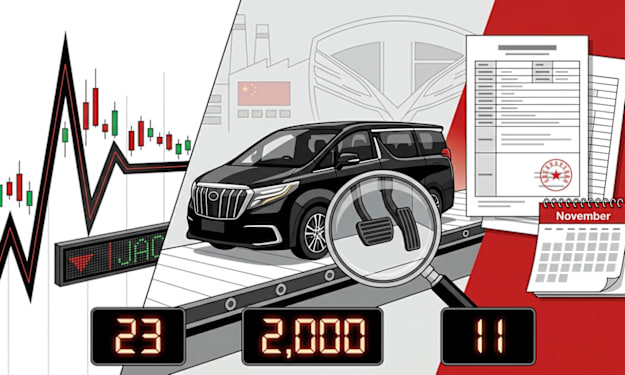
Škoda Auto Volkswagen India: Milestones, Challenges, and Future Plans Škoda Auto Volkswagen India (SAVWIPL) has emerged as a significant player in the Indian automotive industry. The company has recently made headlines due to a series of major developments, including achieving key production milestones, planning future investments in electric vehicle (EV) manufacturing, and dealing with a complex tax dispute with Indian authorities. This article explores Škoda Auto Volkswagen India’s recent progress, the challenges it faces, and its future outlook in the Indian market.
By Madi Speaks2 years ago in Wheel
Chauffeur Services in Melbourne: The Ideal Solution for Your Travel Needs. AI-Generated.
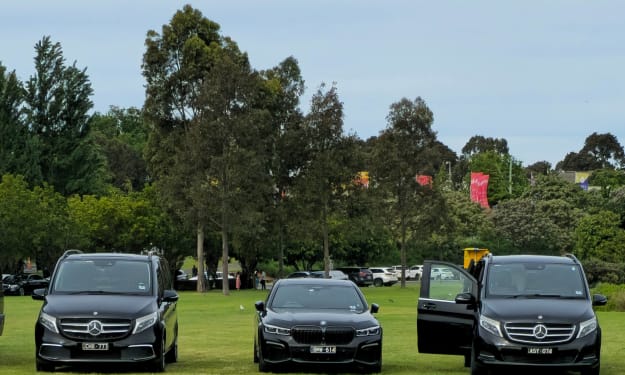
If you’re planning a trip to Melbourne, consider how chauffeur services can elevate your travel experience. From the moment you step off the plane and see a luxury car awaiting you, you can eliminate travel-related stress. Just get in, relax, and enjoy a smooth ride. Whether for business meetings or sightseeing, we aim to make every journey a pleasant one. The experience of riding in comfort and style sets the tone for the entirety of your trip.
By Chauffeur Services2 years ago in Wheel
Would You Rather Questions: The Ultimate Icebreaker for Fun and Deep Conversations
When was the last time you truly laughed with friends or uncovered a surprising detail about someone? If you’re looking for a way to spice up your social gatherings or deepen your connections, Would You Rather questions might be the perfect solution. Simple, engaging, and infinitely customizable, these questions are versatile tools for both entertainment and insight.
By Emma Grace2 years ago in Wheel